
Mandatory Road Signs

This page presents the official Lithuanian Road Traffic Rules (KET) on the topic of "mandatory road signs", valid throughout the Republic of Lithuania under the 2026 rules. Understanding these provisions is essential for passing the theory exam at Regitra and for participating safely in traffic. Each provision below links to the official consolidated KET.
🎥 Video explanation
A short video explaining this topic. The video is in Lithuanian. Open the video page.
📚 Detailed rules
 Motorway
Beginning of a road on which the traffic order established for motorways is in force.
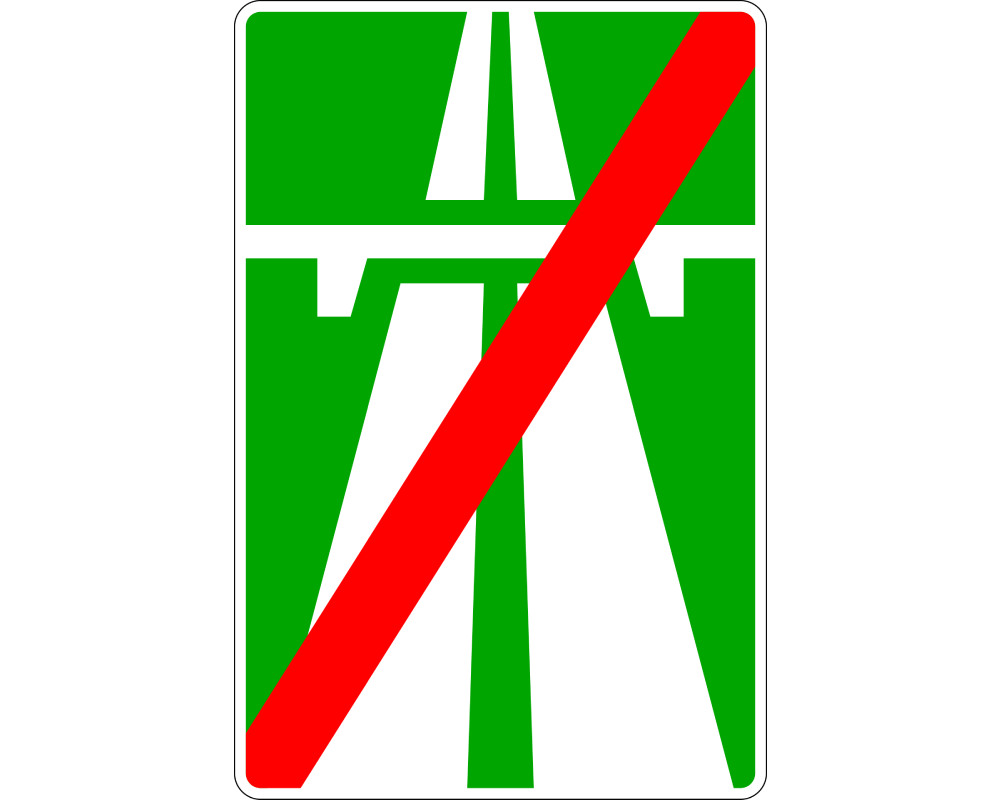 End of motorway
End of a road on which the traffic order established for motorways is in force.
 One-way traffic
A road or carriageway where vehicle traffic across the entire width takes place in one direction.
 End of one-way traffic
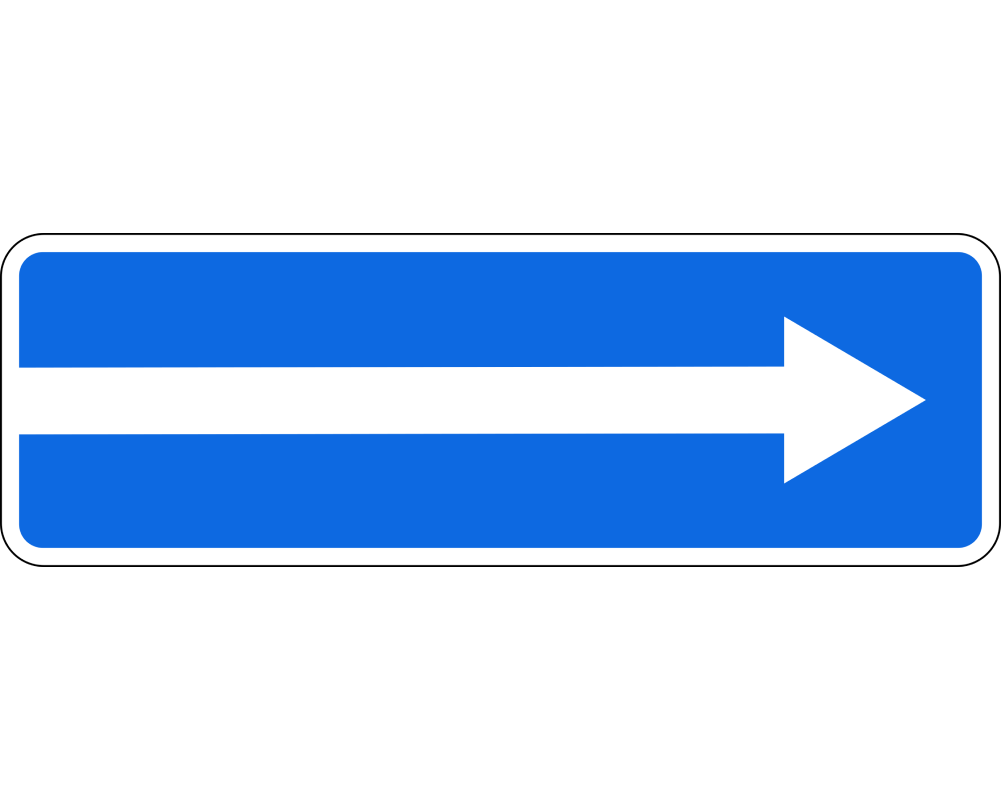 Entrance to a one-way road
Indicates that a one-way traffic road or carriageway is being entered.
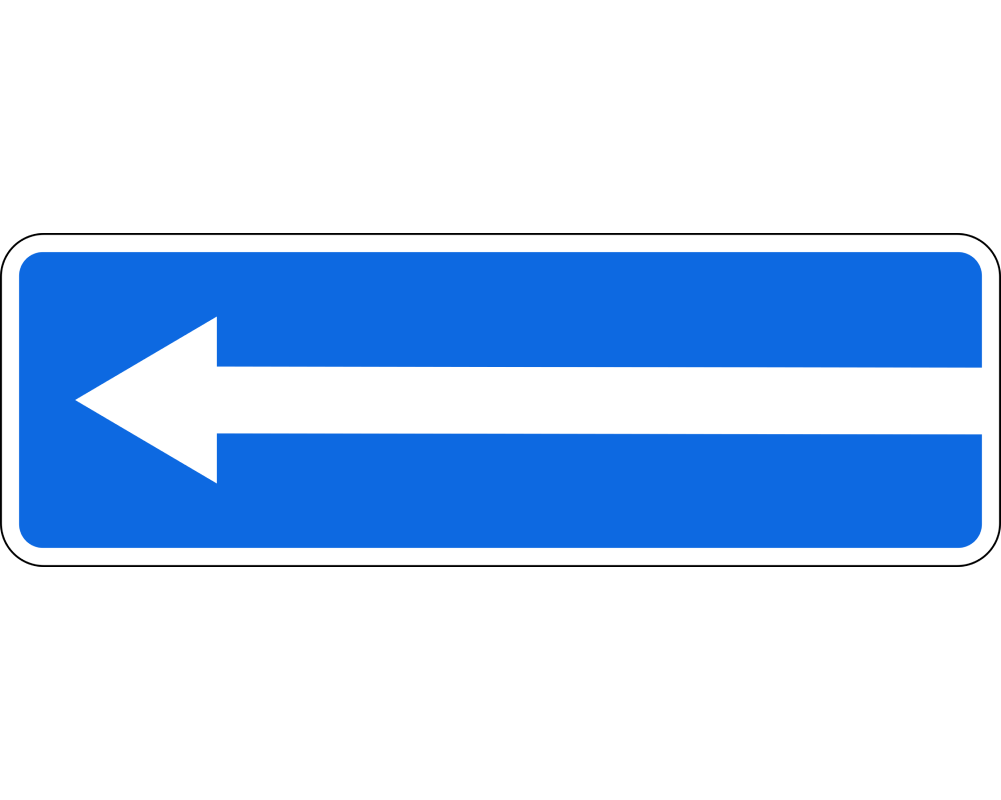 Entrance to a one-way road
Indicates that a one-way traffic road or carriageway is being entered.
 Directions of traffic at an intersection
Indicates the number of lanes and the directions in which travel is permitted in each lane. When a left turn is permitted, turning around is also permitted from the leftmost lane.
 Direction of traffic at an intersection straight ahead
At an intersection, indicates the direction of traffic in which travel is permitted in this lane.
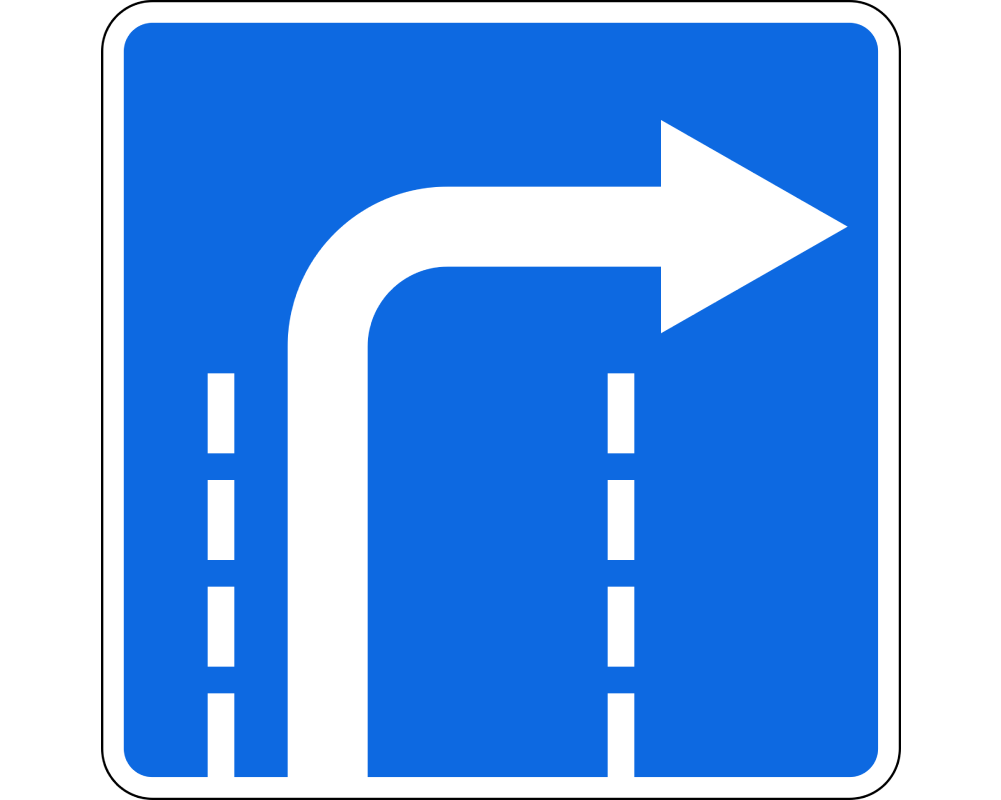 Direction of traffic at an intersection to the right
At an intersection, indicates the direction of traffic in which travel is permitted in this lane.
 Direction of traffic at an intersection to the left
At an intersection, indicates the direction of traffic in which travel is permitted in this lane. When a left turn is permitted, turning around is also permitted from the leftmost lane.
 Direction of traffic at an intersection straight ahead and to the right
At an intersection, indicates the direction of traffic in which travel is permitted in this lane.
 Direction of traffic at an intersection straight ahead and to the left
At an intersection, indicates the direction of traffic in which travel is permitted in this lane. When a left turn is permitted, turning around is also permitted from the leftmost lane.
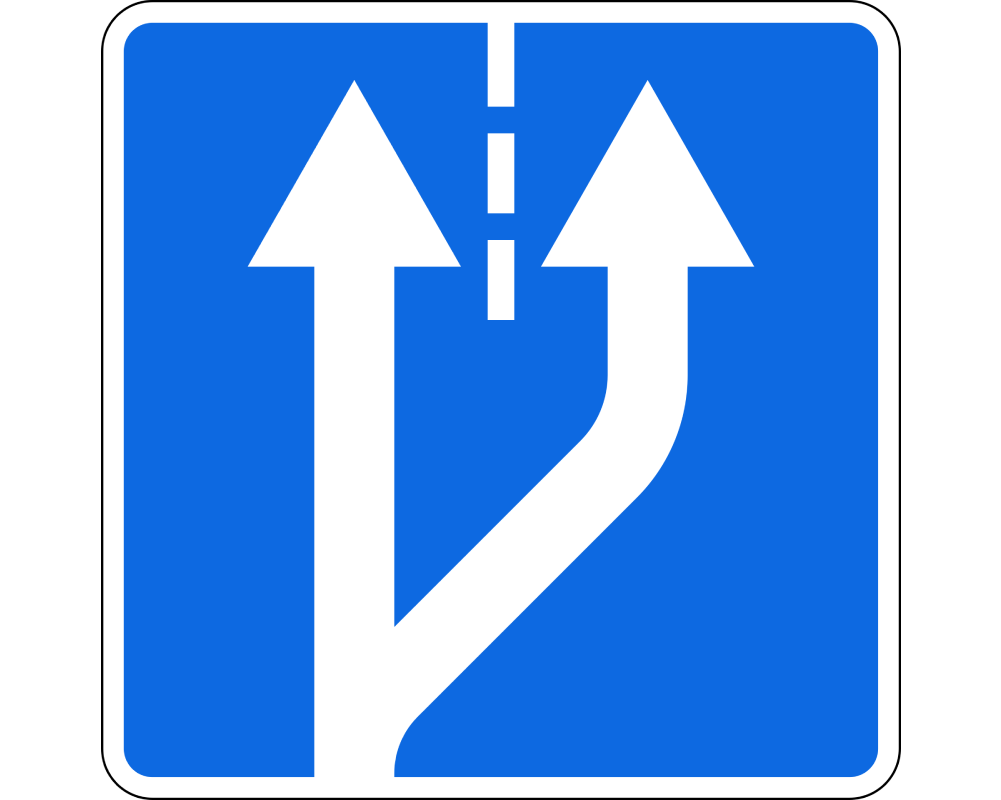 Beginning of lane from the right
Additional lane or beginning of deceleration lane. Vehicles exiting the road must change lanes to the deceleration lane; vehicles traveling uphill that cannot travel faster than those following them must change lanes to the additional lane.
 Beginning of lane from the left
Beginning of additional lane on the carriageway from the left side, and number of lanes for travel in that direction.
 End of right lane
End of additional lane or acceleration lane.
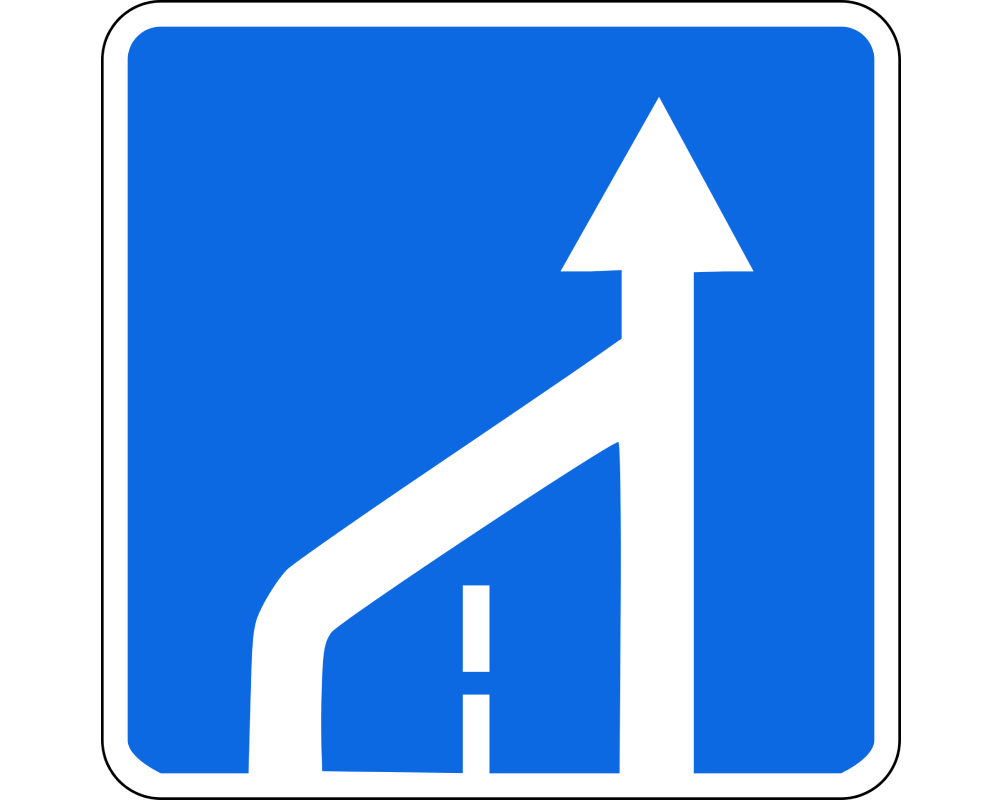 End of left lane
End of the lane on the left side of the carriageway.
 Directions of traffic in lanes
Indicates the directions of traffic in lanes.
 Directions of traffic in lanes
Indicates the directions of traffic in lanes.
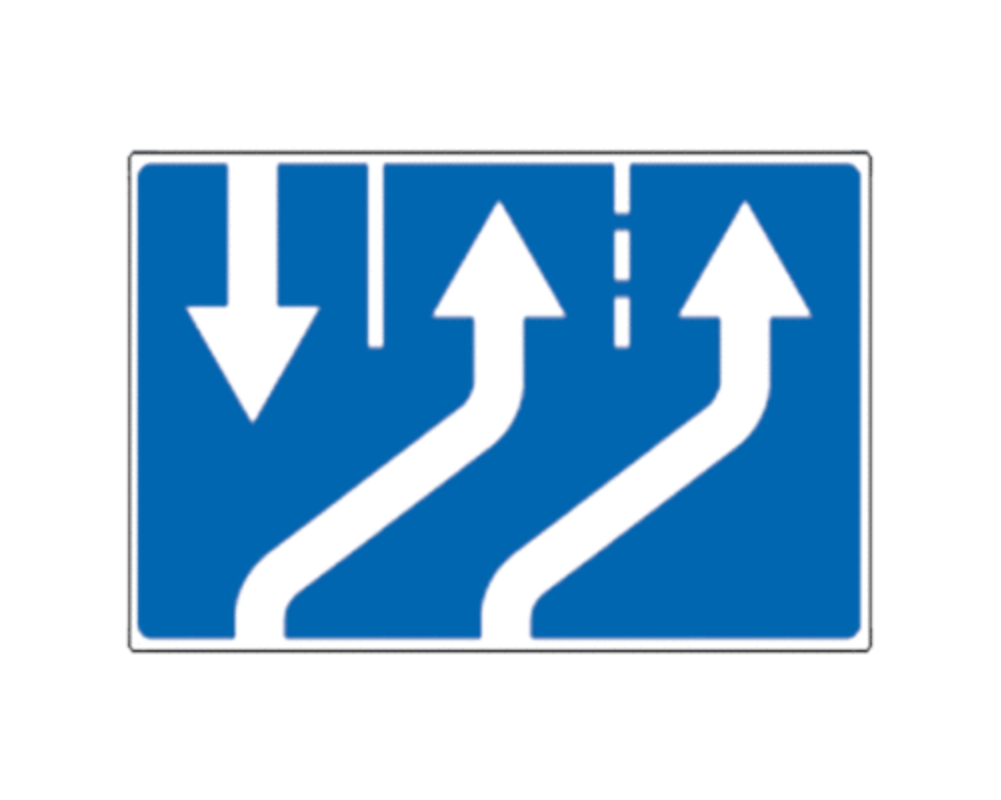 Directions of traffic in lanes
Indicates the directions of traffic in lanes and the trajectory of travel.
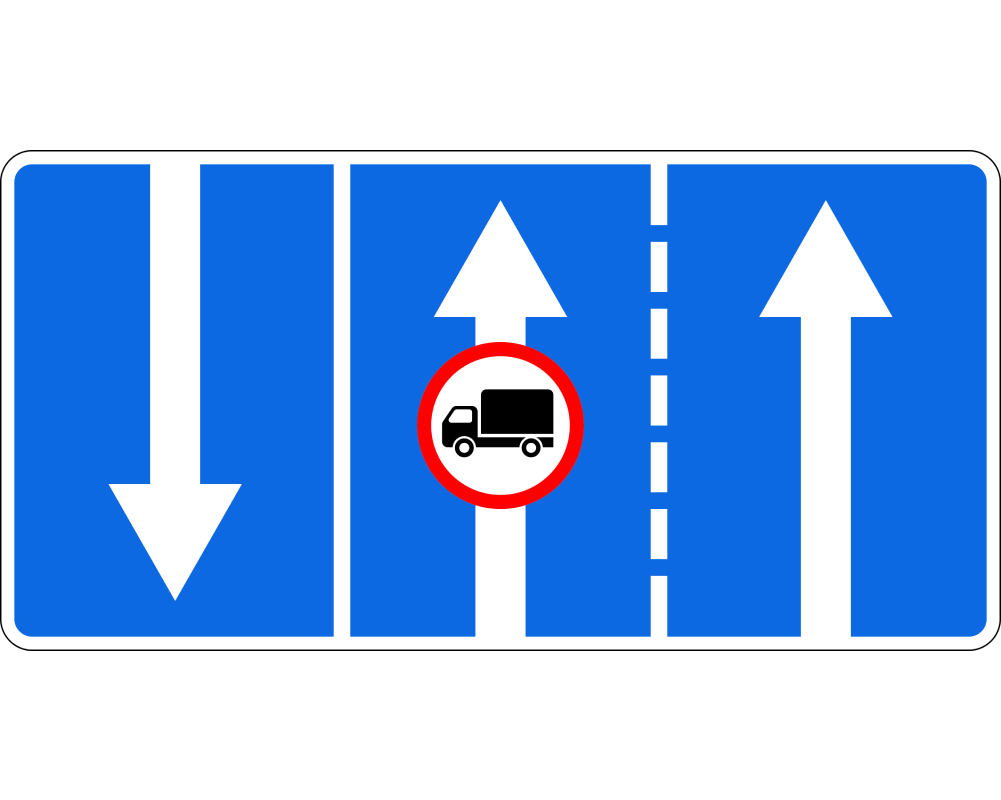 Directions of traffic and restrictions
The requirements of the prohibitory or directional road sign depicted on the road sign apply to vehicles traveling in that lane in the section up to the nearest intersection.
 Beginning of lane and restrictions
Vehicles to which the restrictions indicated on the road sign apply must change lanes to the newly opened lane.
 Traffic in lanes
Indicates that the outermost lane at an intersection is intended for vehicles entering the road. Other drivers are permitted to enter it only beyond the intersection. The first road sign is used on the main road, the second – on the joining minor road.
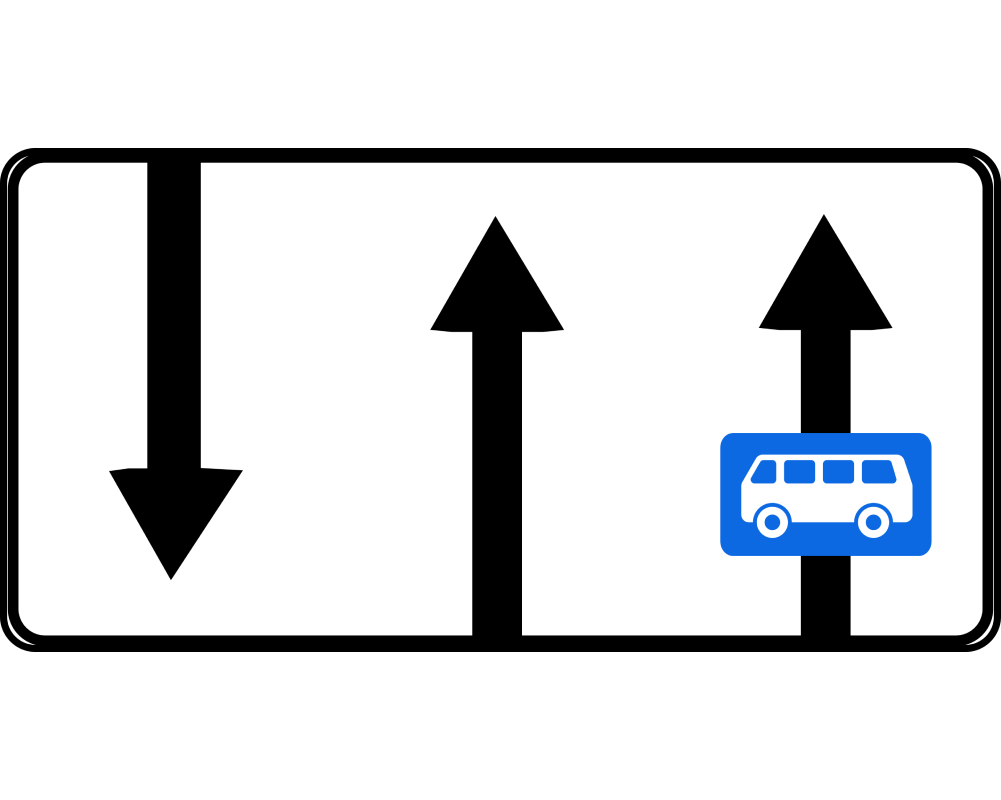 Lane for public transport
Indicates a lane intended for public transport traveling in the same direction as the entire vehicle flow. When the road sign is used with supplementary plates indicating the time of validity, it indicates that the lane intended for public transport is valid at the specified time.
 Road with a lane for public transport
A road on which public transport travels on a specially designated lane against the flow of vehicles. When the road sign is used with supplementary plates indicating the time of validity, it indicates that the lane intended for public transport is valid at the specified time.
 Entrance to a road with a lane for public transport
Indicates that a road marked with the road sign "Road with a lane for public transport" is being entered.
 Entrance to a road with a lane for public transport
Indicates that a road marked with the road sign "Road with a lane for public transport" is being entered.
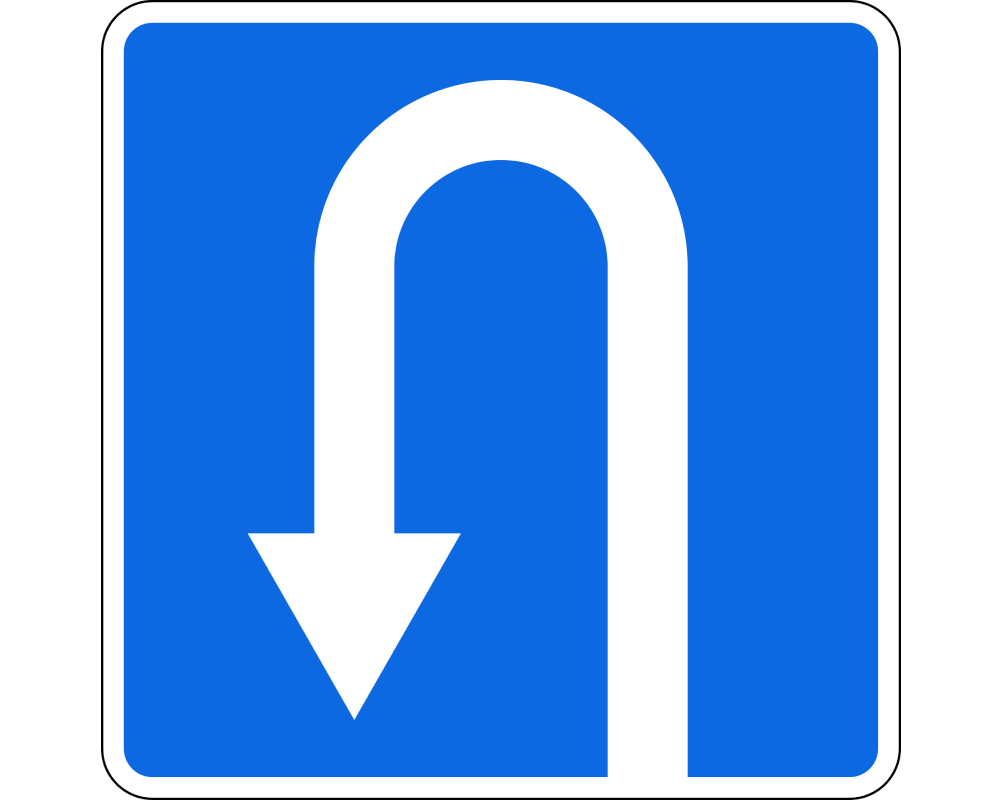 Turnaround place
A turnaround place outside an intersection.
 Parking place
A vehicle parking place.
 Parking place with limited time
A parking place where vehicles are permitted to park no longer than indicated.
 Parking place at specified times
A parking place where vehicles are permitted to park only at the specified times, except for vehicles marked with the distinguishing mark "Person with disability" or a disabled person's car parking card.
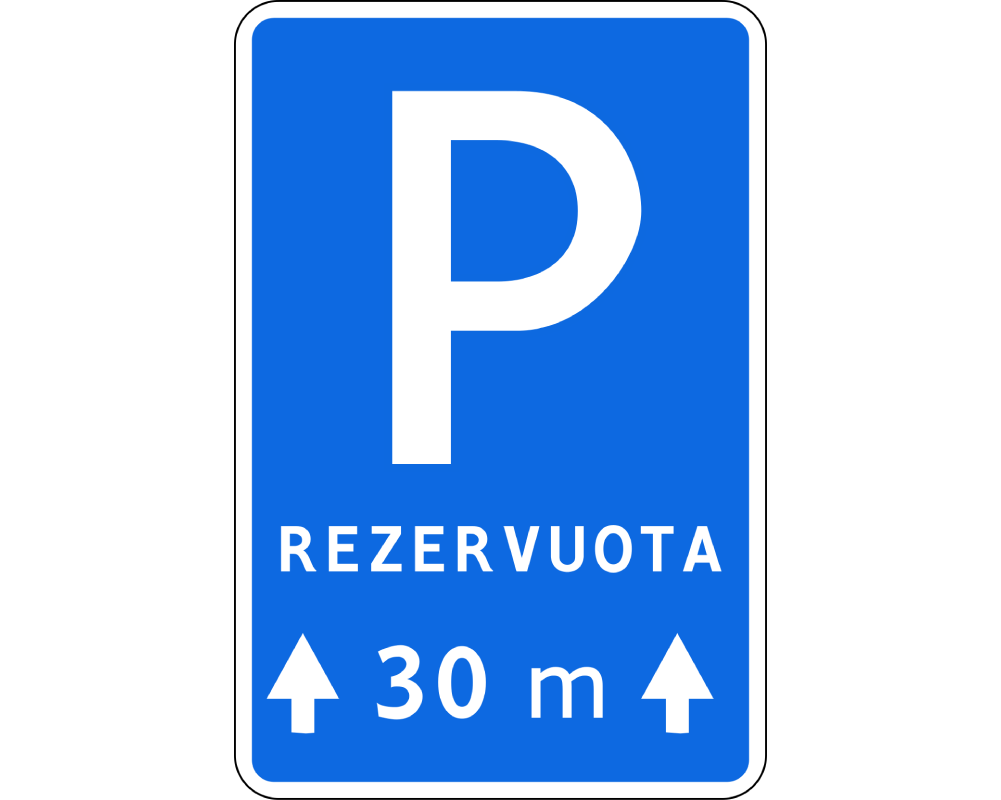 Reserved parking place
A parking place where vehicles are permitted to park only with special permits. Non-electronic permits are attached behind the windshield.
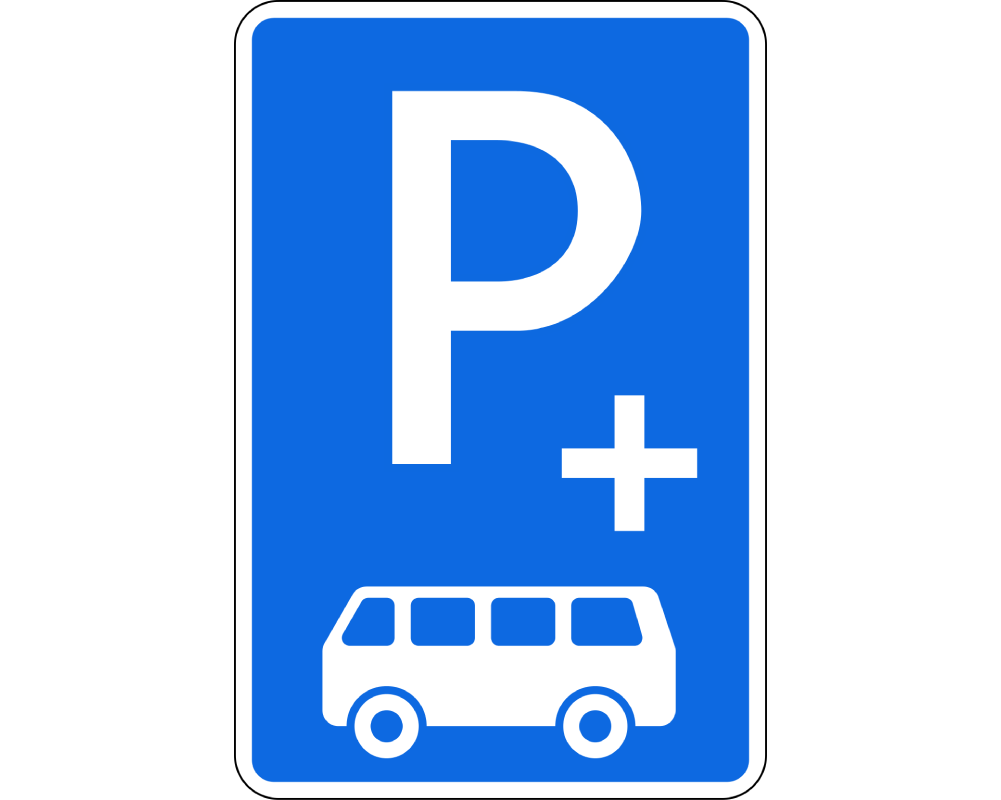 Parking place and public transport
A parking place next to which there is a public transport stop. After leaving the vehicle parked, one may continue traveling by public transport.
 Pedestrian crossing
A place for crossing the road.
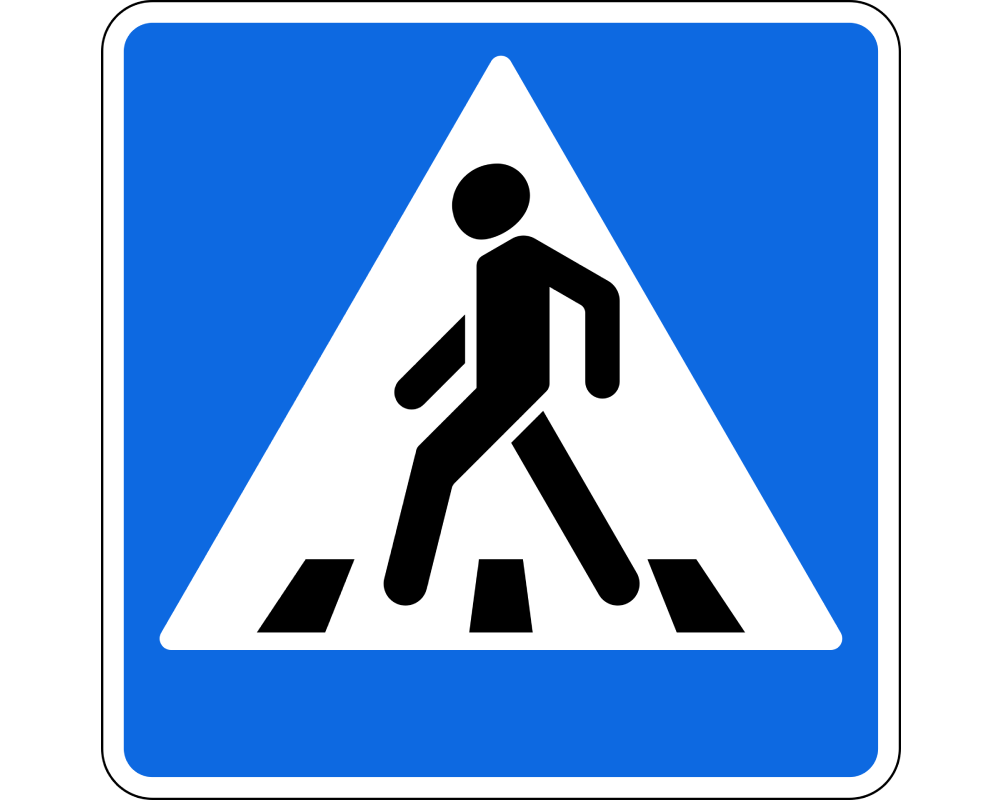 Pedestrian crossing
A place for crossing the road.
 Underground pedestrian crossing
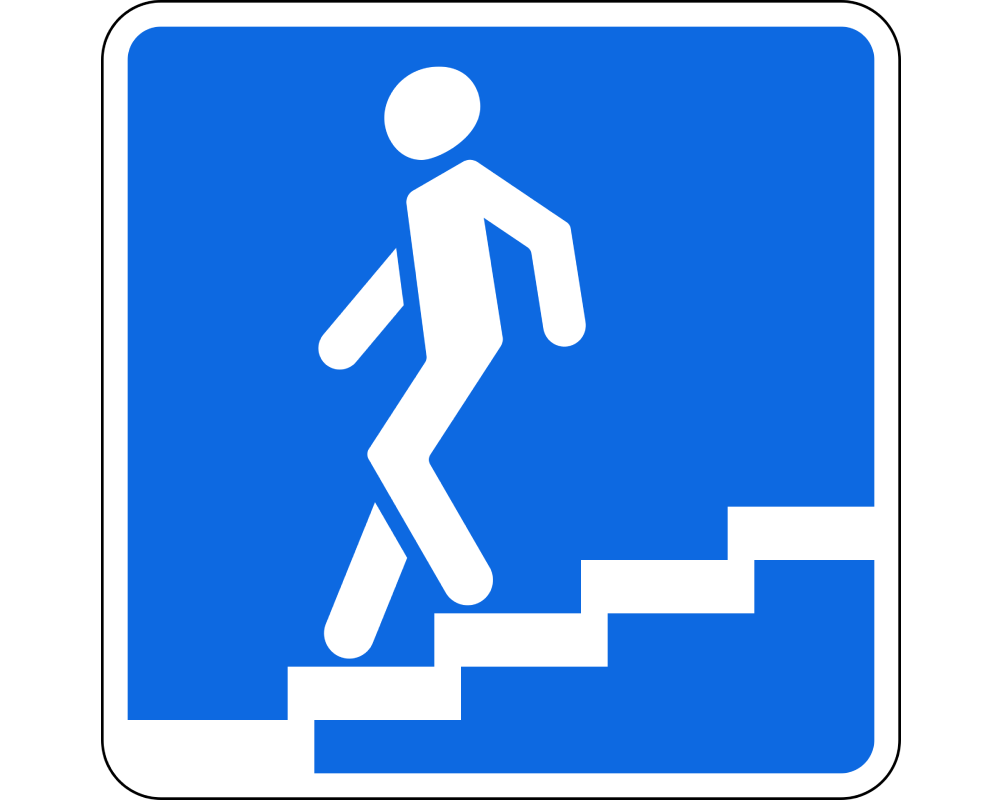 Underground pedestrian crossing
 Overhead pedestrian crossing
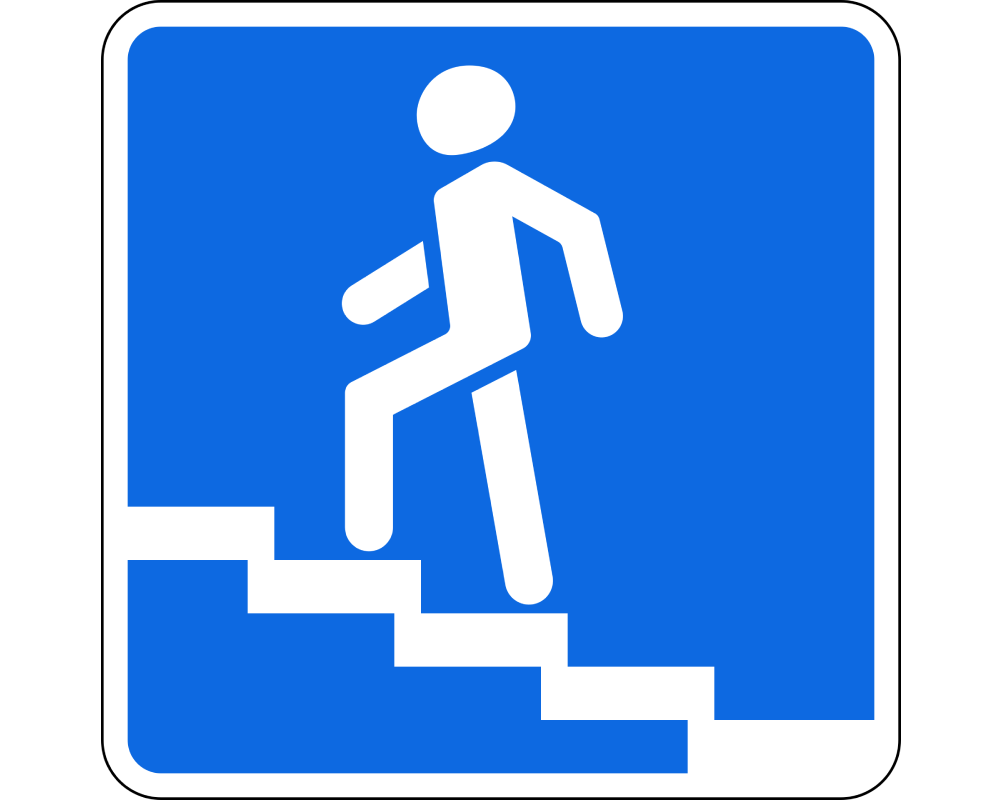 Overhead pedestrian crossing
 Recommended speed
The speed at which it is recommended to drive in that road section up to the nearest intersection. When the road sign is installed together with a warning road sign, the recommendation applies in the dangerous section.
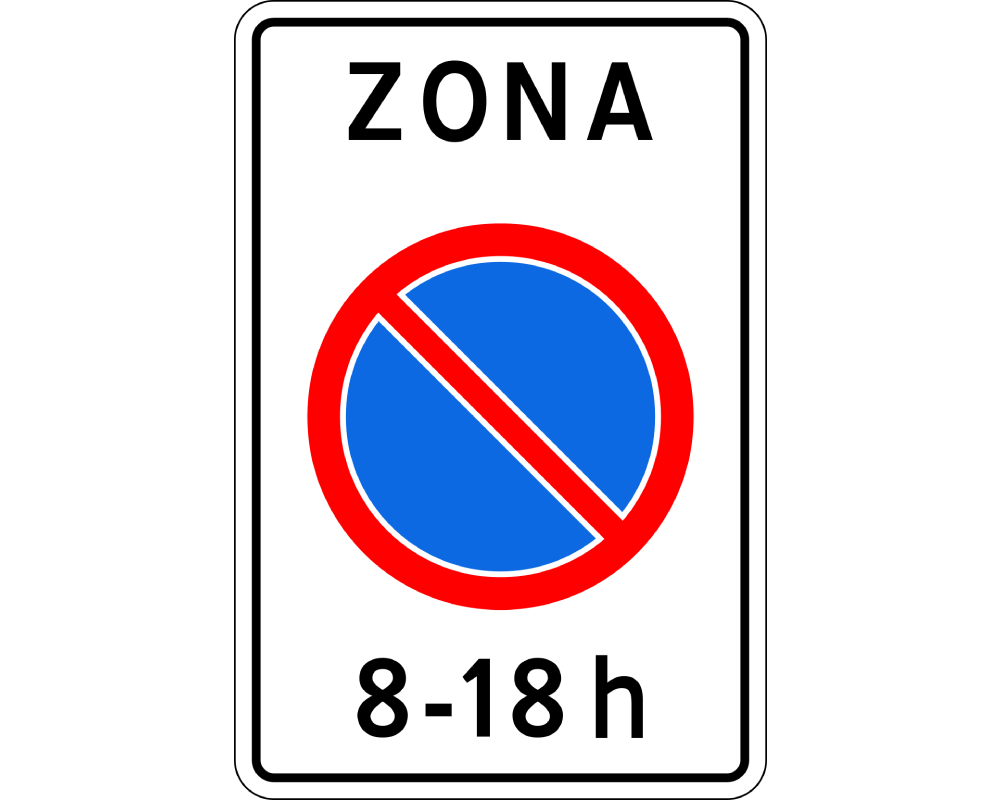 Zone where parking is prohibited
At the specified time, or if no time is specified – around the clock, vehicles are prohibited from parking on all roads located in the territory beyond the road sign, except in places specifically designated for parking and marked with the appropriate road signs and (or) horizontal markings.
 Parking zone
Vehicles may park on all roads located in the territory beyond the road sign. When a time is specified, the road sign is valid only at that time.
 Limited speed zone
On all roads located in the territory beyond the road sign, it is prohibited to drive faster (km/h) than indicated on this sign. When a time is specified, the road sign is valid only at that time.
 End of zone where parking is prohibited
Marks the place from which the requirements of the road sign "Zone where parking is prohibited" no longer apply.
 End of parking zone
Marks the place from which the requirements of the road sign "Parking zone" no longer apply.
 End of limited speed zone
Marks the place from which the requirements of the road sign "Limited speed zone" no longer apply.
 Tunnel
In a tunnel, it is prohibited to drive in reverse, turn around, stop or park. If traffic stops, the driver must switch off the engine.
 End of tunnel
The place from which the requirements of the road sign "Tunnel" no longer apply.
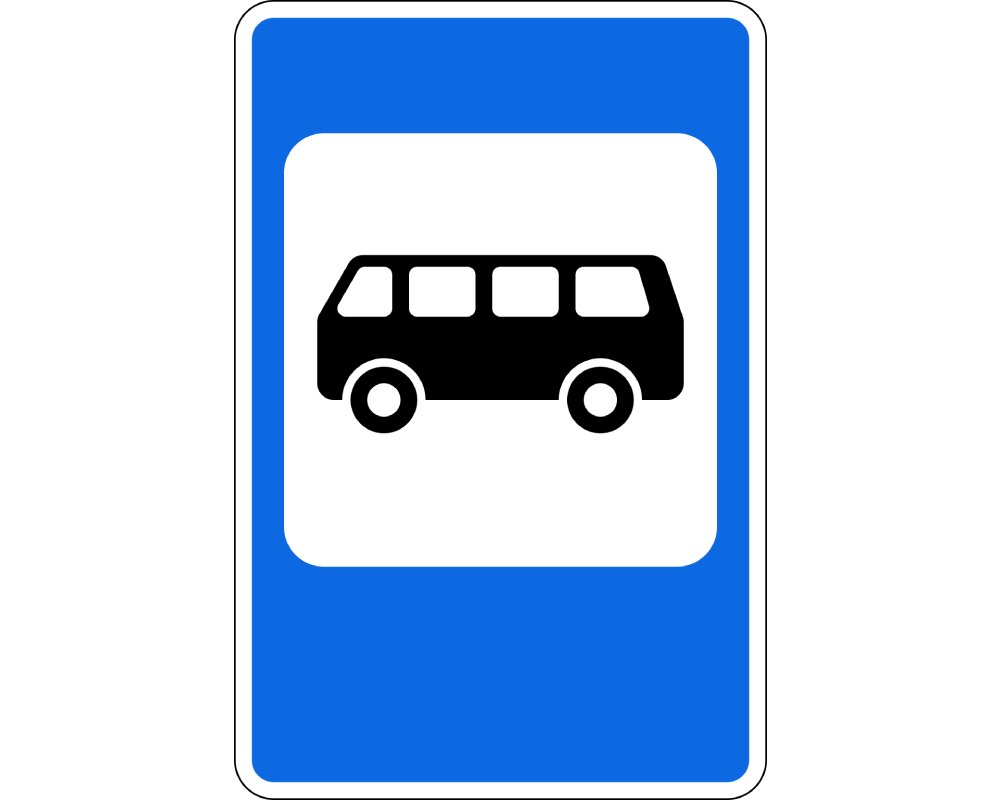 Stop
Stop
A public transport stop place.
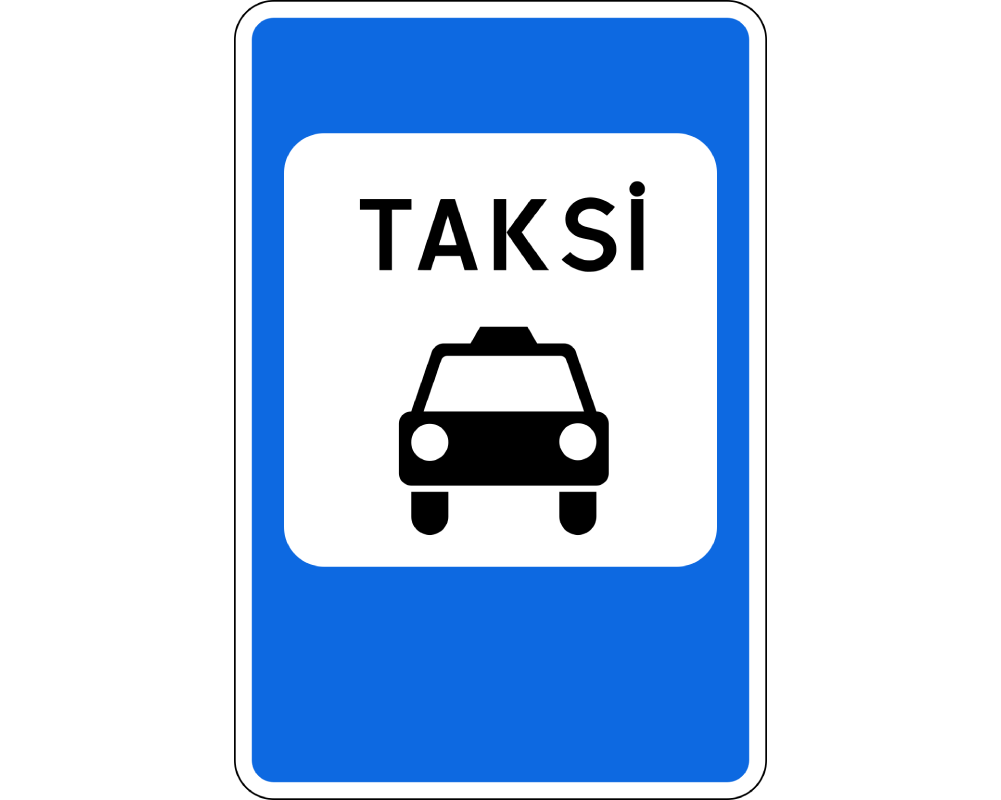 Taxi stand
A parking place for passenger taxis.
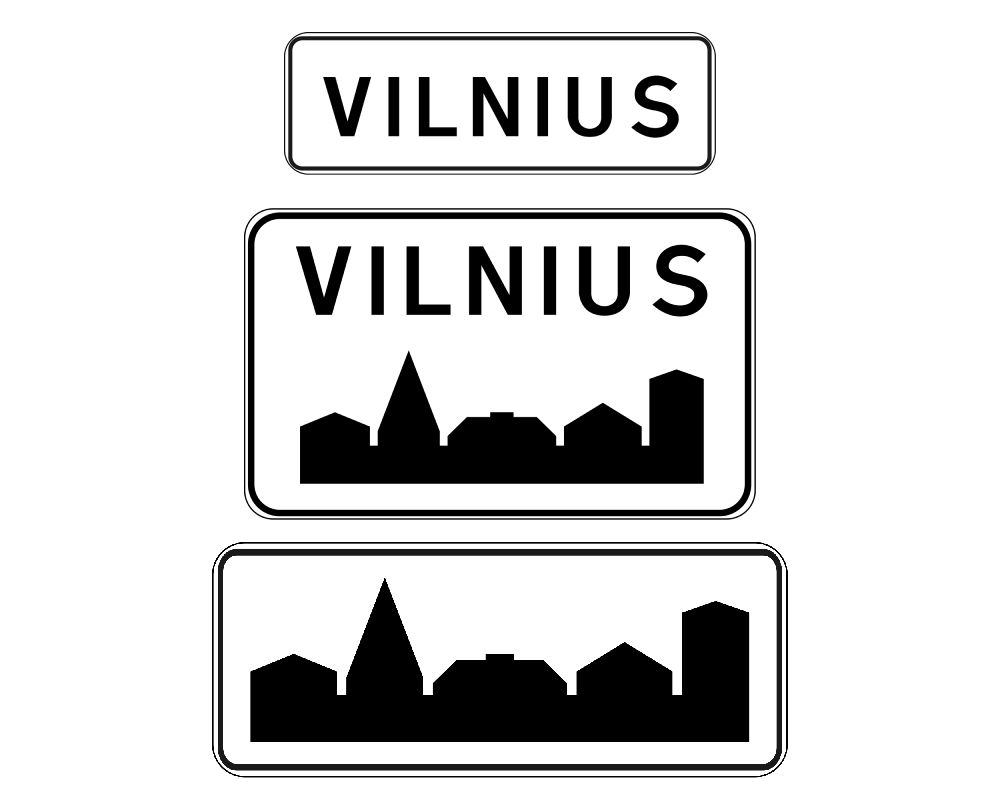 Beginning of built-up area
The beginning of a built-up area where the requirements of the Road Traffic Rules (hereinafter – the Rules) establishing traffic order in built-up areas are in force.
 End of built-up area
The place from which the requirements of the Rules establishing traffic order in built-up areas no longer apply.
 Residential zone
In the territory beyond the road sign, the requirements of the Rules establishing traffic order in residential zones are in force.
 End of residential zone
The place from which the requirements of the Rules establishing traffic order in residential zones no longer apply.
 "Stop" line
Indicates the place where vehicles must stop on a prohibitory traffic light (controller) signal.
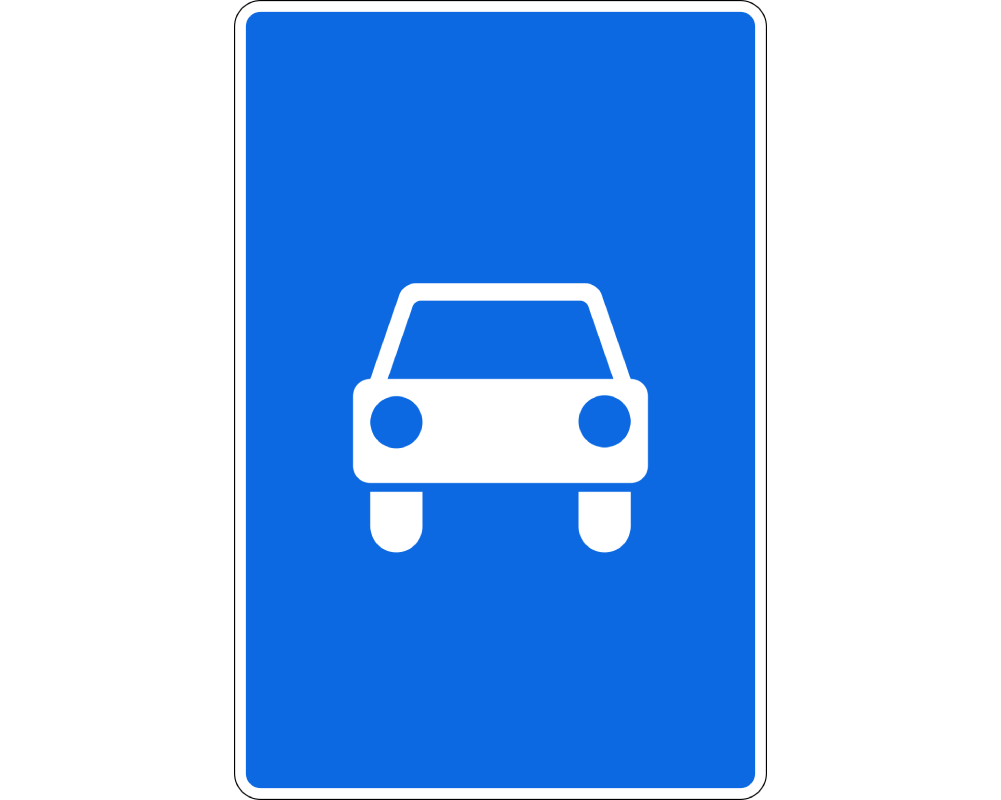 Expressway
The beginning of a road on which the traffic order established for expressways is in force.
 End of expressway
The end of a road on which the traffic order established for expressways is in force.
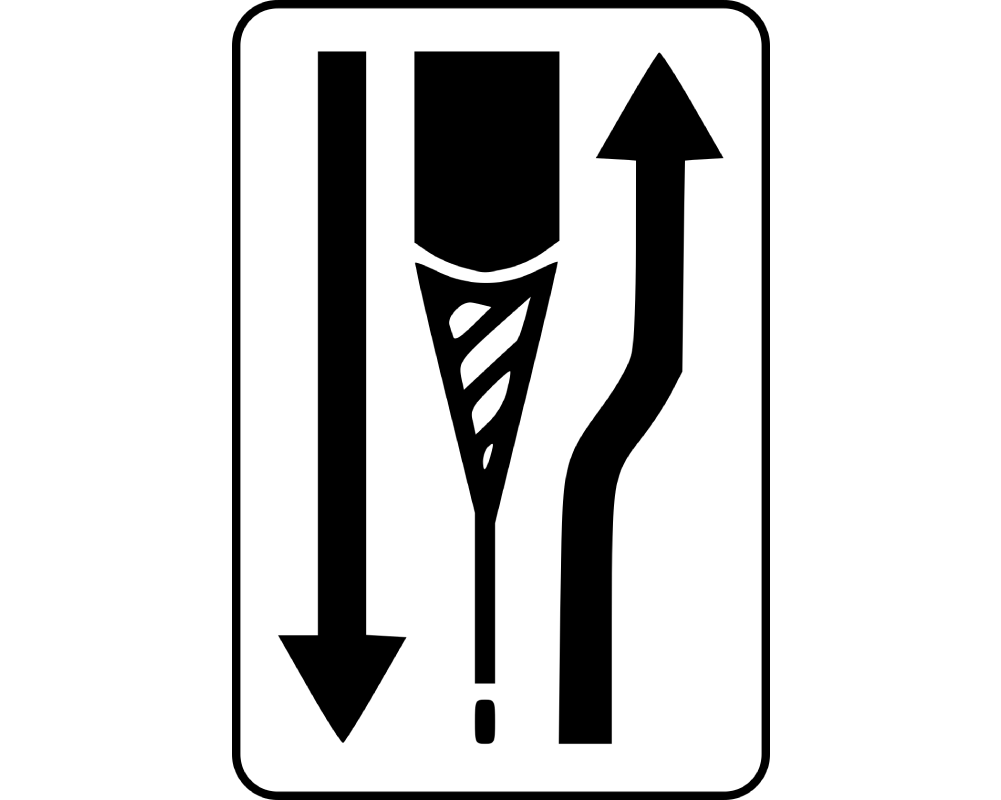 Raised safety island
A raised safety island installed on the road.
 Emergency stopping place
A place for emergency stopping of a vehicle.
Bicycle street. On the road in the territory beyond the road sign, the requirements of the Rules establishing traffic order on a bicycle street are in force.
End of bicycle street. The place from which the requirements of the Rules establishing traffic order on a bicycle street no longer apply.
 Low-emission zone
A city territory established by the municipal council in which, on all roads beyond the road sign, the traffic of motor vehicles, tractors and self-propelled machines, except non-polluting vehicles, is restricted or completely prohibited.
 The parking order requirements of mandatory road signs Nos
528–532 having an area of validity are valid from the mandatory road sign to the nearest intersection or intersection of carriageways beyond the mandatory road sign, which is marked with priority road signs, road signs "Intersection of equal-status roads", "Junction with a minor road", "Minor road from the right", "Minor road from the left" or "Roundabout", and in built-up areas where no such intersection or intersection of carriageways is indicated – until the end of the built-up area, marked with the mandatory road sign "End of built-up area".
The parking order requirements of mandatory road signs Nos. 528–532 having an area of validity are also valid from the mandatory road sign to other mandatory road signs Nos. 528–532 or prohibitory road signs Nos. 332–335.