
Warning Road Signs

This page presents the official Lithuanian Road Traffic Rules (KET) on the topic of "warning road signs", valid throughout the Republic of Lithuania under the 2026 rules. Understanding these provisions is essential for passing the theory exam at Regitra and for participating safely in traffic. Each provision below links to the official consolidated KET.
🎥 Video explanation
A short video explaining this topic. The video is in Lithuanian. Open the video page.
📚 Detailed rules
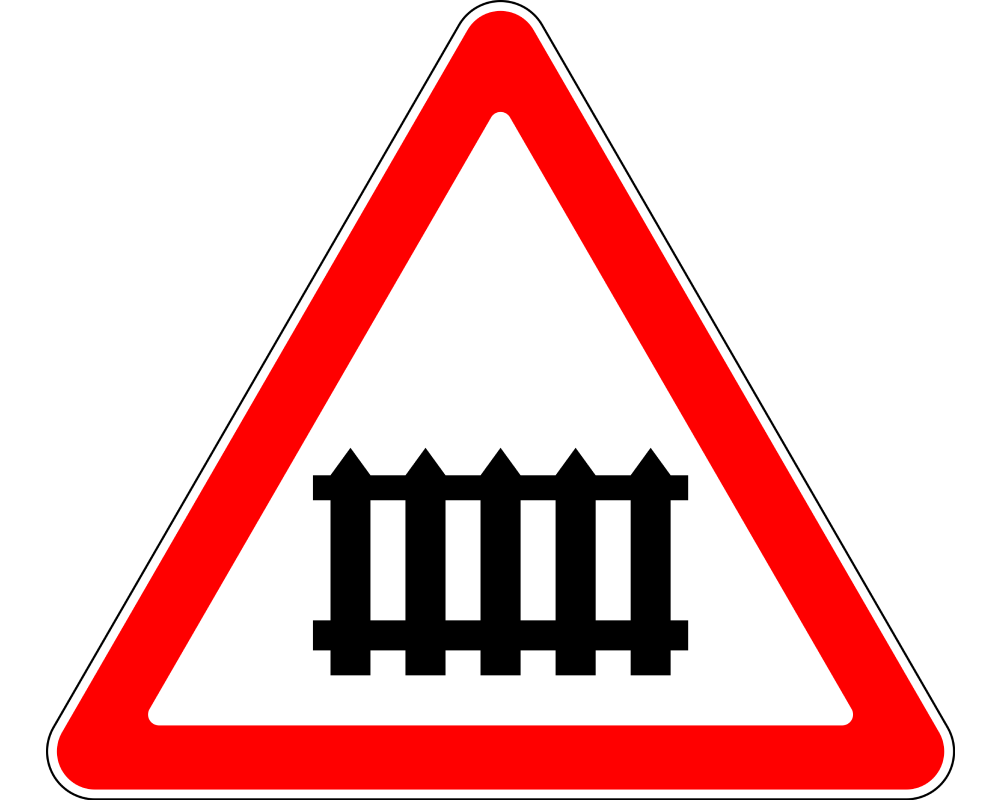 Crossing with barrier
Railway crossing with a lifting barrier.
 Crossing without barrier
Railway crossing without a lifting barrier.
 Drawbridge
Warns of approach to a drawbridge.
 Quay
Quay
Entrance to a quay or shore.
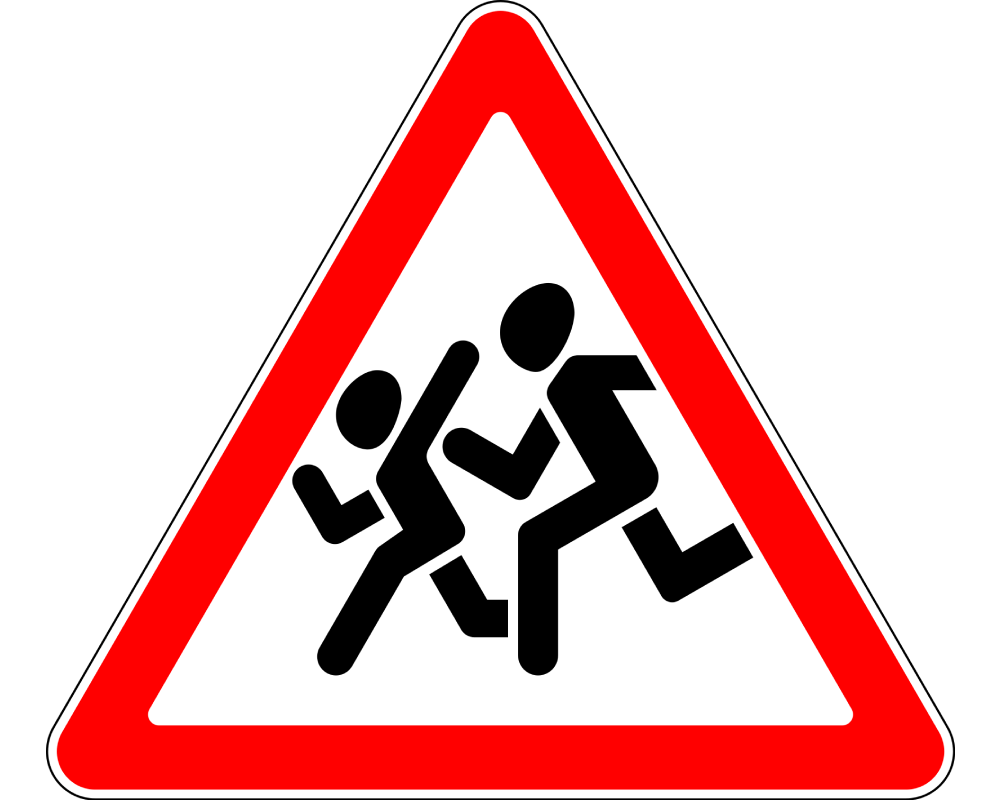 Children
A road section where children may be on the carriageway (near kindergartens, schools, playgrounds, and the like).
 Road works
A section of road where work is being carried out.
 Intersection of equal-status roads
 Junction with a minor road
The main road is crossed by a minor road.
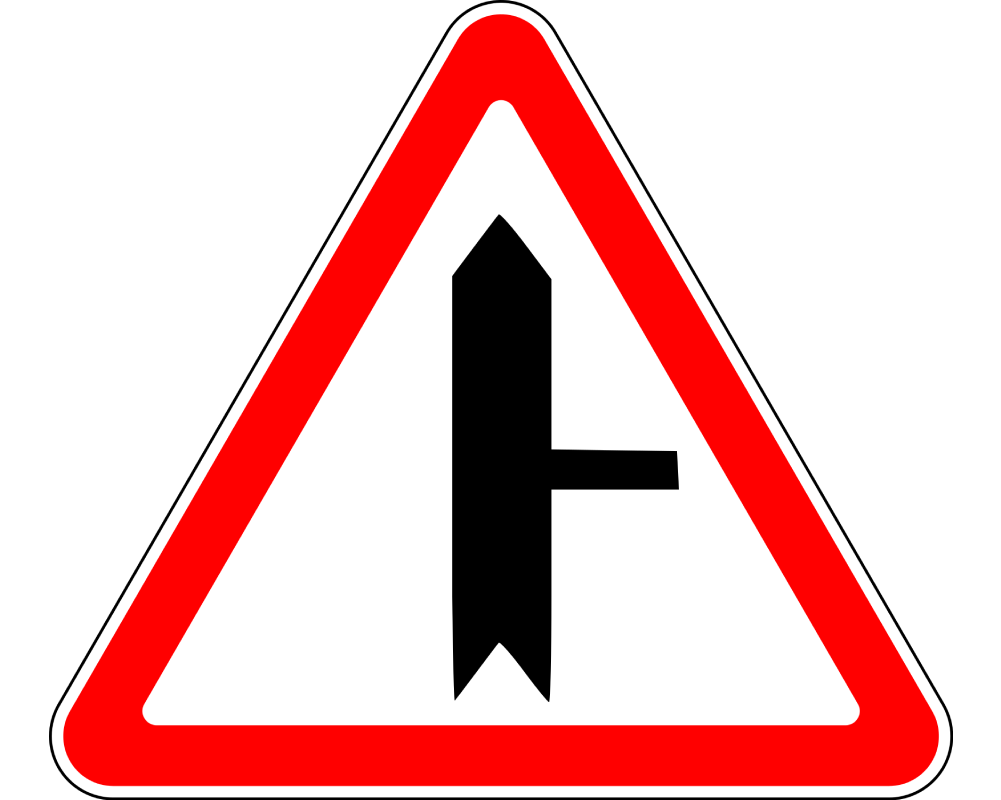 Minor road from the right
A minor road joins the main road from the right side.
 Minor road from the left
A minor road joins the main road from the left side.
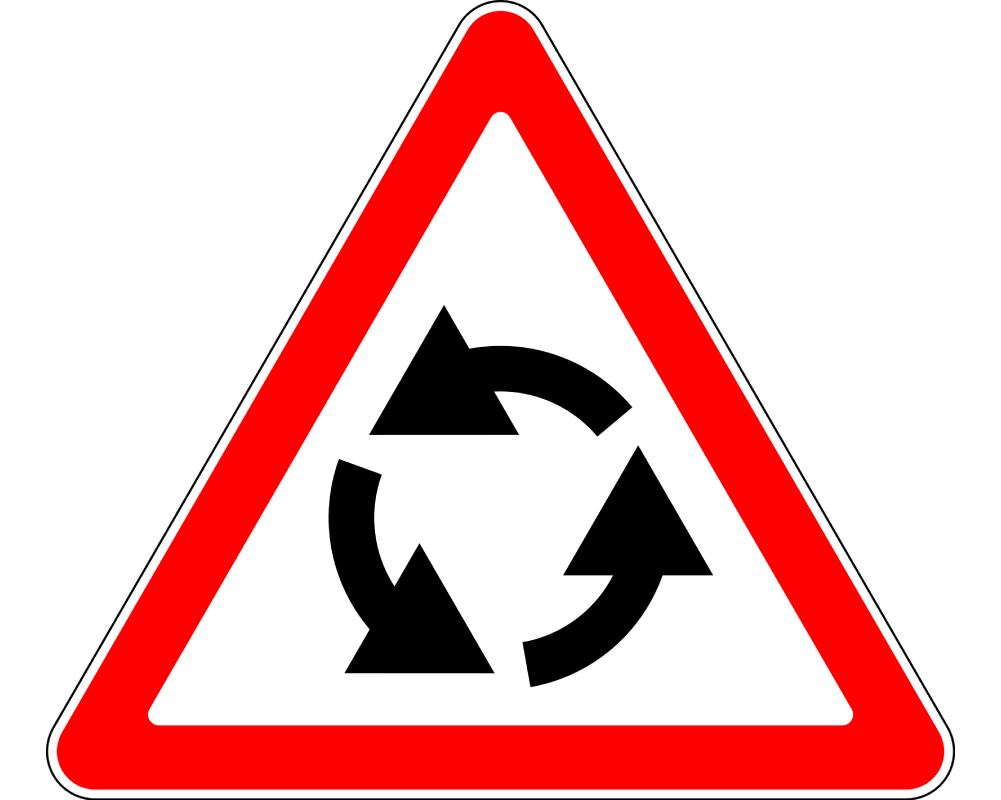 Roundabout
An intersection where circular traffic is mandatory.
 Traffic light
An intersection, pedestrian crossing or road section where traffic is regulated by traffic lights.
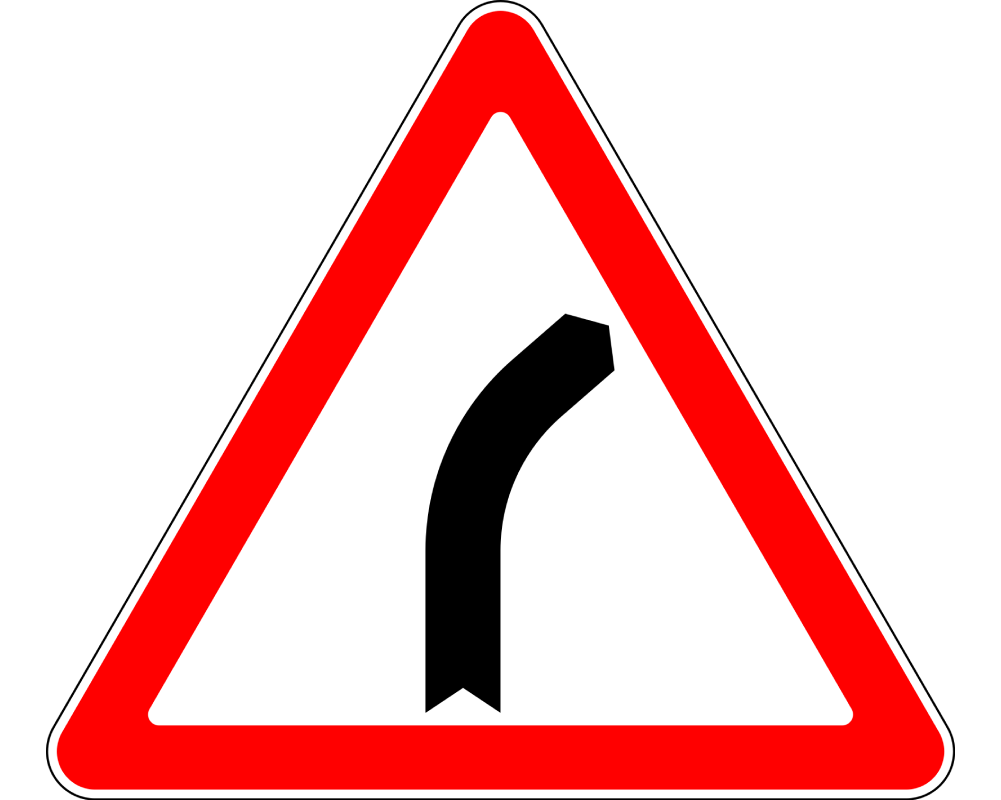 Right bend
A short-radius or limited-visibility bend in the road to the right.
 Left bend
A short-radius or limited-visibility bend in the road to the left.
 Bends
Bends
A road section with short-radius or limited-visibility bends. The first bend is to the right.
 Bends
Bends
A road section with short-radius or limited-visibility bends. The first bend is to the left.
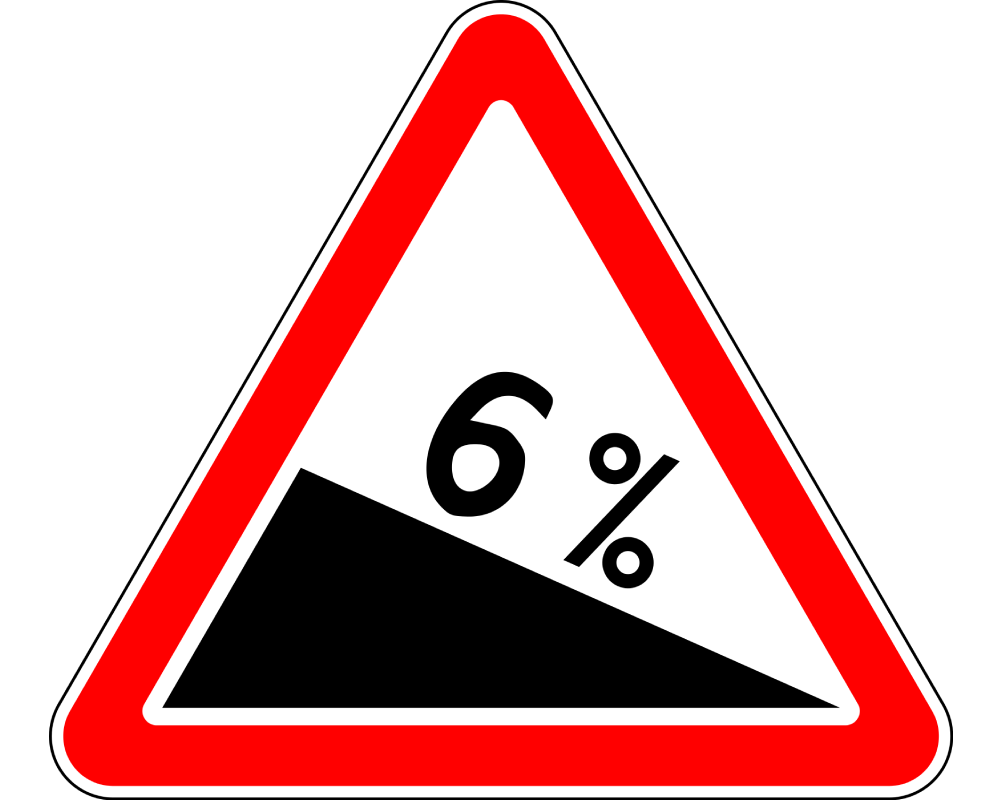 Steep downhill
 Steep uphill
 Slippery road
A road section with a more slippery carriageway than the preceding section.
 Uneven road
A road section with unevenness in the carriageway (waves, potholes, rough joints with bridges, and the like).
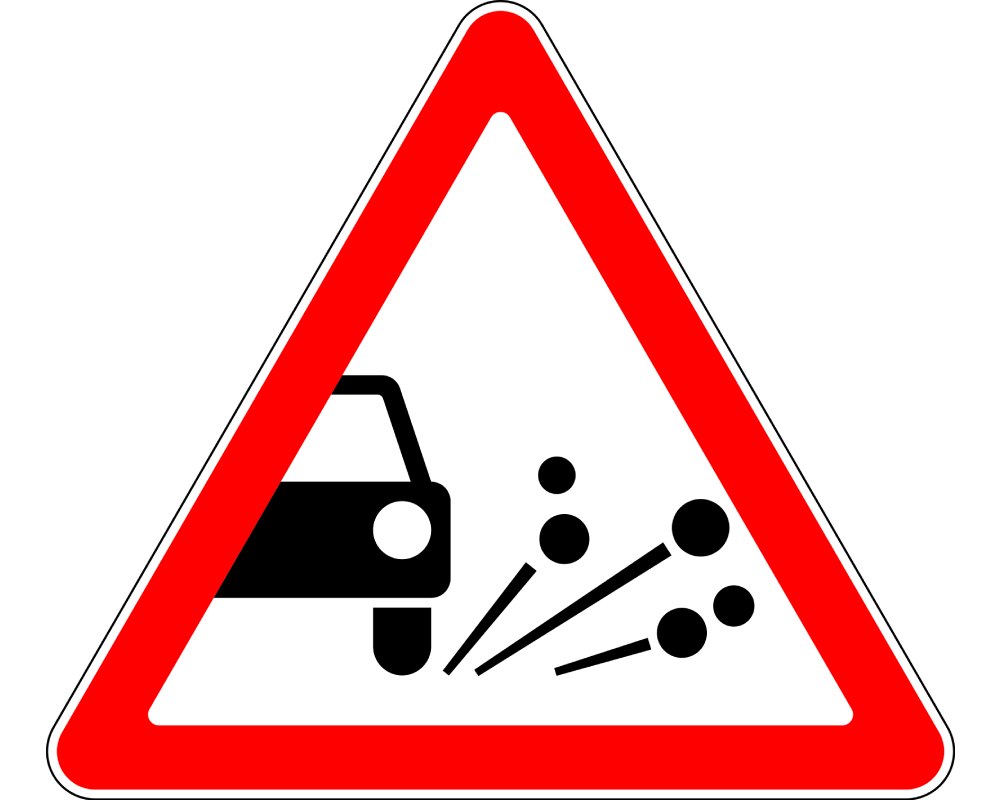 Gravel
A section of a road with an improved surface where gravel, crushed stone or the like may be thrown from under the wheels.
 Dangerous shoulder
A road section with an unstable, pothole-ridden shoulder.
 Narrowing
Narrowing of the carriageway from both sides.
 Narrowing from the right
Narrowing of the carriageway from the right side.
 Narrowing from the left
Narrowing of the carriageway from the left side.
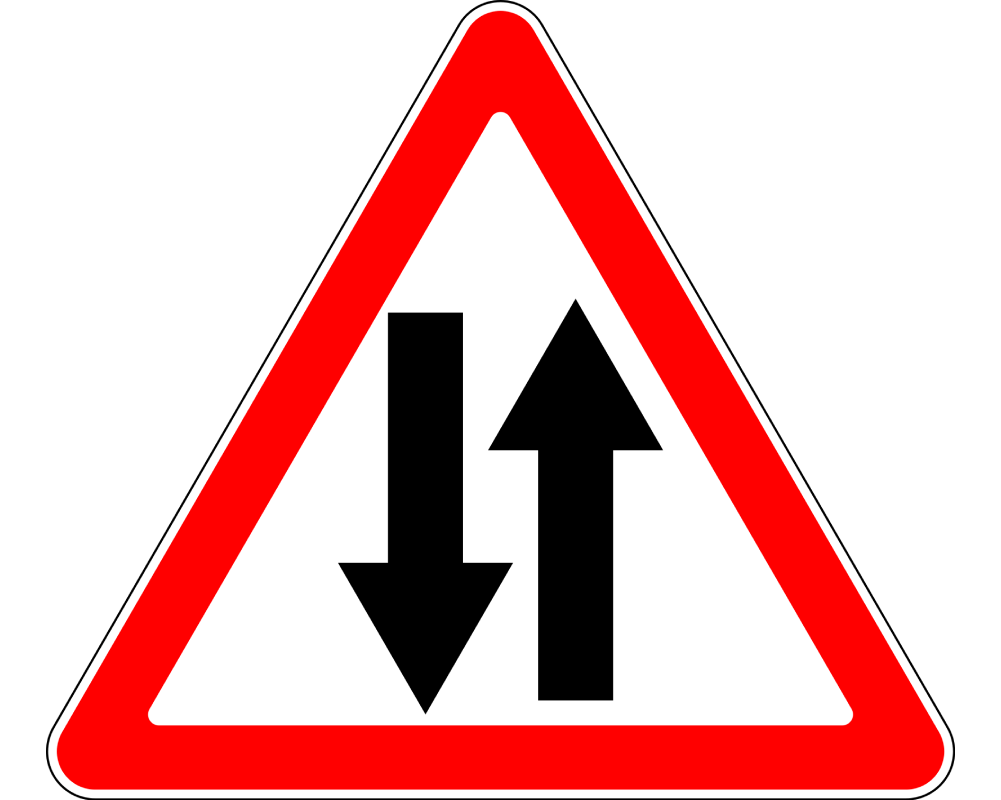 Two-way traffic
Beginning of a section of carriageway with two-way traffic.
 Pedestrian crossing
A pedestrian crossing marked with the mandatory road signs "Pedestrian crossing" and marking lines 1.13.1–1.13.3, or only with the mandatory road signs "Pedestrian crossing".
 Pedestrians
A road section where pedestrians walk across or along the carriageway (shoulder).
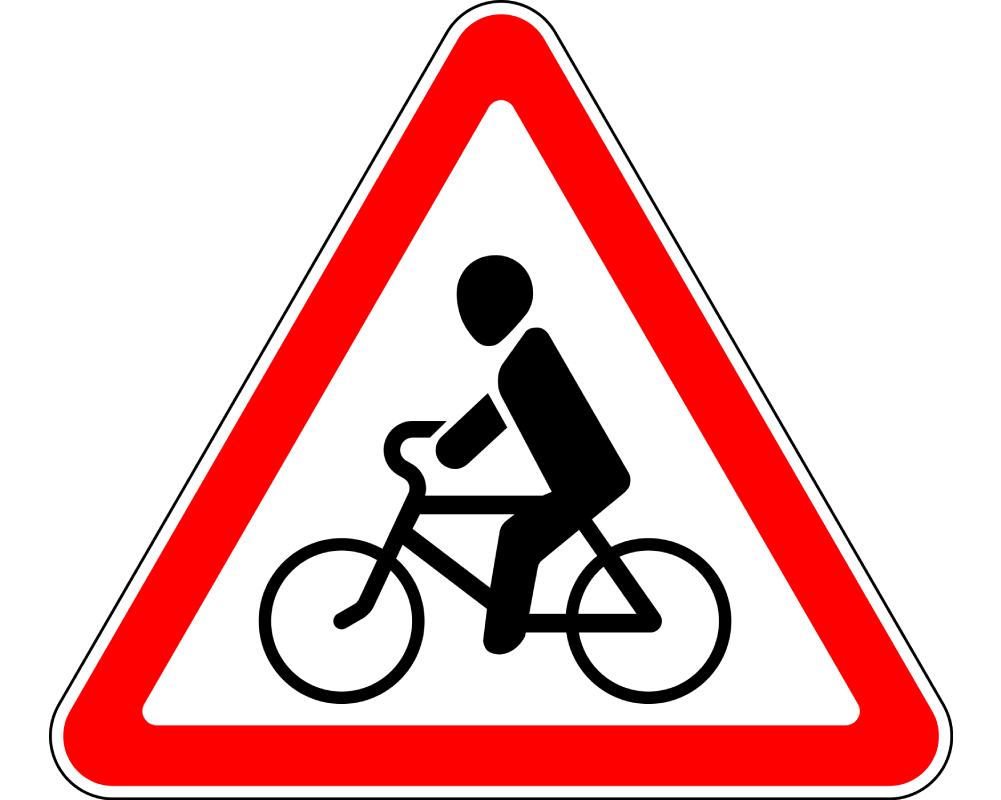 Cyclists
Warns of a road section frequently entered or crossed by cyclists or riders of electric micro-mobility vehicles.
 Livestock crossing
 Wild animals
Warns of a road section where there is a high probability that wild animals may cross the road.
 Falling rocks
A road section where landslides, rockfalls or falling rocks are possible.
 Crosswind
 Aircraft
A road section over which aircraft take off or land.
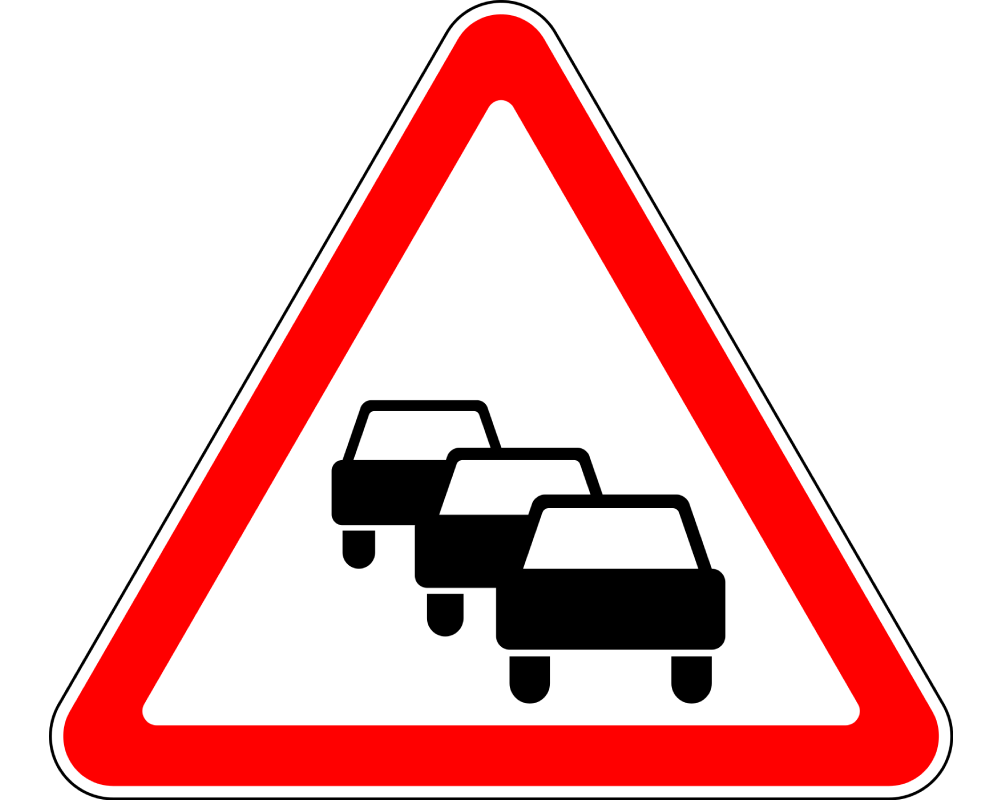 Traffic congestion
A road section that is difficult to drive on due to traffic congestion.
 Accident-prone section
A road section where many traffic accidents occur.
 Other dangers
A road section with dangers not covered by other road signs.
 Single-track railway
A railway crossing without a lifting barrier across a single-track railway.
 Multi-track railway
A railway crossing without a lifting barrier across a railway with two or more tracks.
 Approach to crossing
Warns of approach to a railway crossing outside built-up areas. The sign is installed farthest from the railway crossing, on the right side of the road.
 Approach to crossing
Warns of approach to a railway crossing outside built-up areas. The sign is installed on the right side of the road.
 Approach to crossing
Warns of approach to a railway crossing outside built-up areas. The sign is installed closest to the railway crossing, on the right side of the road.
 Approach to crossing
Warns of approach to a railway crossing outside built-up areas. The sign is installed farthest from the railway crossing, on the left side of the road.
 Approach to crossing
Warns of approach to a railway crossing outside built-up areas. The sign is installed on the left side of the road.
 Approach to crossing
Warns of approach to a railway crossing outside built-up areas. The sign is installed closest to the railway crossing, on the left side of the road.
 Direction of bend to the right
Direction of travel at a limited-visibility, short-radius road bend, road narrowing, or road repair or construction site.
 Direction of bend to the left
Direction of travel at a limited-visibility, short-radius road bend, road narrowing, or road repair or construction site.
 Divergence of traffic directions
Directions of travel at a T-shaped intersection, road junction, or road repair or construction site.
 Directional guidepost
Marks the boundaries of a lane and the trajectory of travel at a road work site.
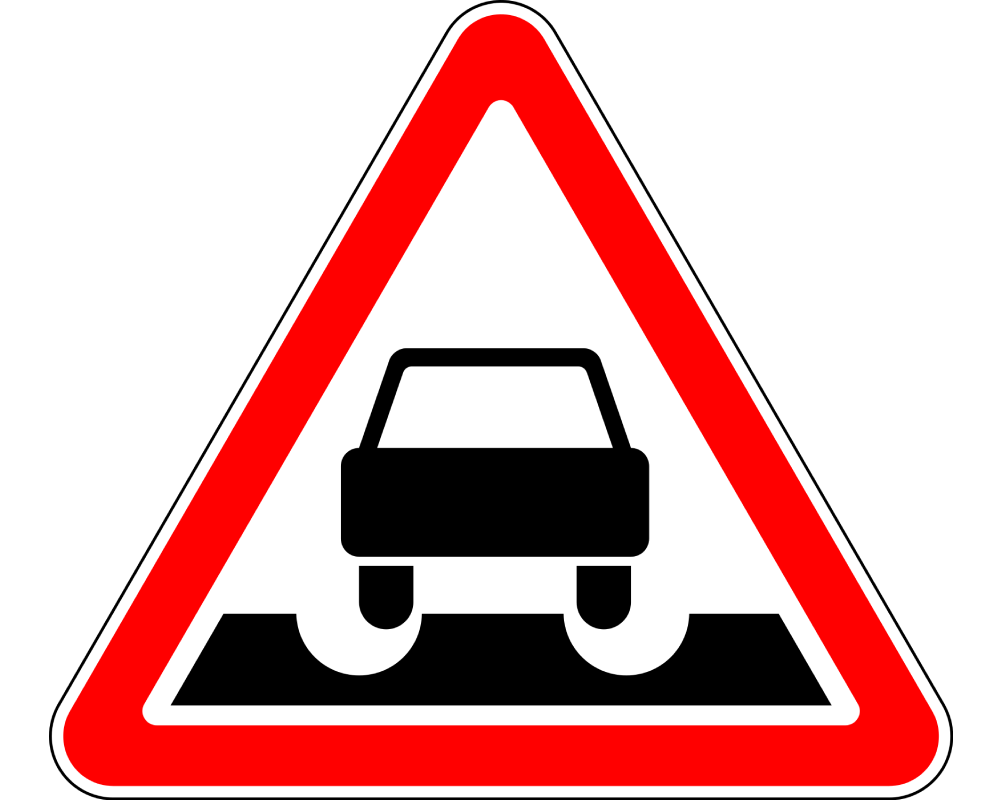 Ruts
Ruts
A road section with longitudinal unevenness.
 Speed-reducing device
Warns of a speed-reducing device (hump, etc.) installed on the road.
Warning road signs Nos. 101–137, 150, 151 mark a dangerous road section starting at 50–100 m in built-up areas and 150–300 m outside built-up areas from the location of the warning road sign installation. If the said warning road signs are installed together with the supplementary plate "Distance to object", the dangerous road section starts at the distance indicated on the supplementary plate "Distance to object". If the said warning road signs are installed together with the supplementary plate "Area of validity ahead", this plate indicates the length of the dangerous road section, which starts at 50–100 m in built-up areas and 150–300 m outside built-up areas from the location of the warning road sign installation.