
Products that can trigger a breathalyzer
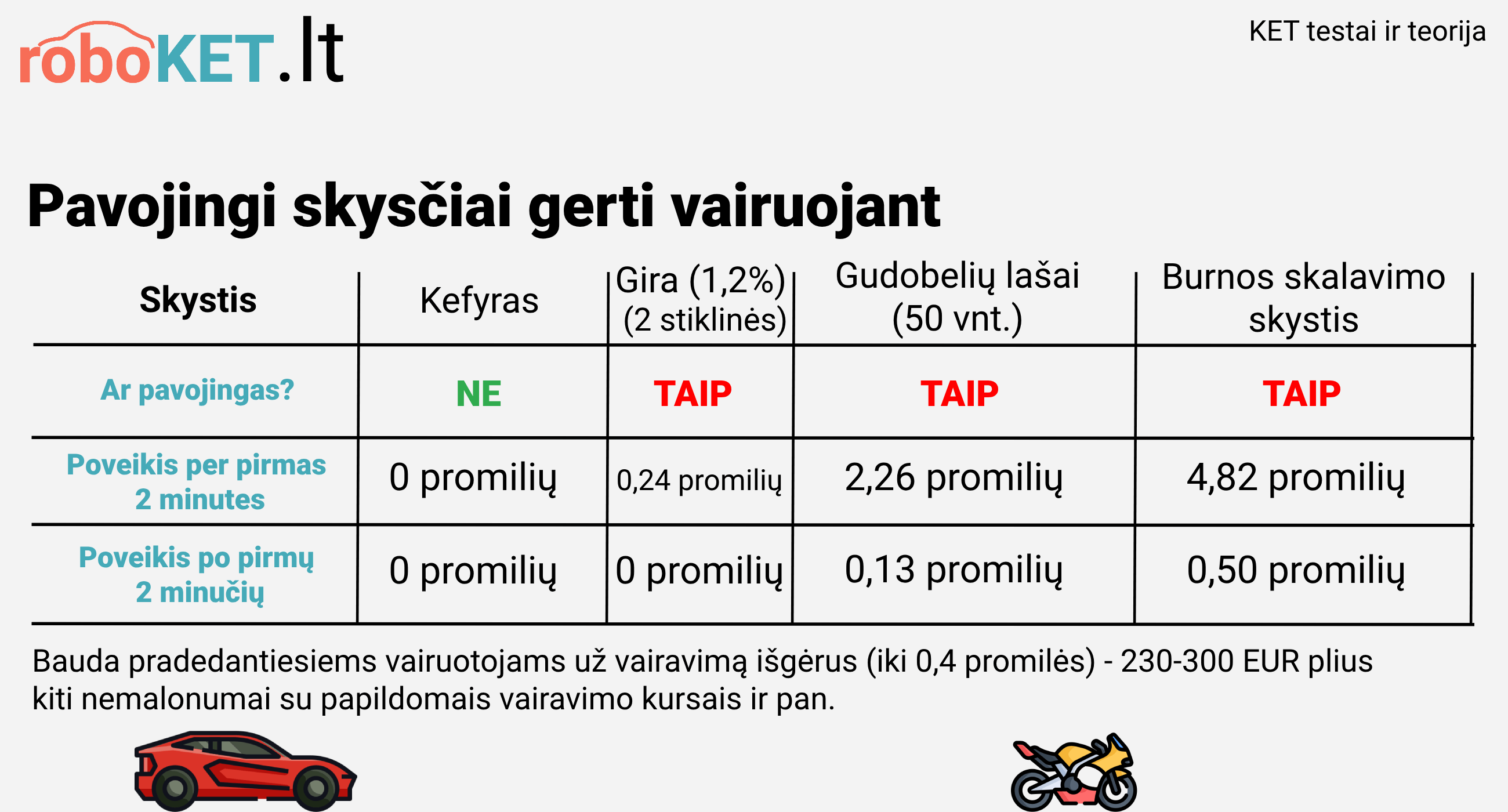
Several food and hygiene products believed to cause problems at a police alcohol check were put to the test. These experiments are informational — repeated tests may vary.
Kvass (gira)
Kvass lovers know it contains alcohol — some producers state up to 2.2% by volume on the label. In the test, after two glasses of kvass an immediate breathalyzer reading showed 0.24‰. Not alarming for experienced drivers — Lithuania allows up to 0.4‰ for drivers with more than two years of experience — but for novice drivers, who face a zero-per-mille rule, 0.24‰ would mean explaining yourself to officers.
Hawthorn drops, mouth spray and mouthwash
After 50 hawthorn drops mixed with water, the device showed 2.26‰ — equivalent to medium intoxication. Mouth freshener spray showed 2.74‰, and rinsing with mouthwash produced a spectacular 4.82‰ — formally severe intoxication.
The readings vanish within minutes
All the readings above were taken immediately after use. Repeating the test just 2 minutes later: kvass — 0‰; hawthorn drops — 0.13‰; mouth spray — down from 2.74‰ to 0.08‰; mouthwash — from 4.82‰ down to 0.5‰.
And kefir?
There's a saying that "even kefir will make you blow positive" — the experiment showed otherwise: after half a litre of kefir, the breathalyzer showed zero from the very start.
Conclusion: household products can produce unpleasantly surprising readings immediately after use, but within a short time the values drop rapidly until nothing is detected.